Training & Prep
The Interval You’re Not Running: How to Build OCR-Specific Speed Work That Actually Transfers to the Course
November 11, 2026

November 11, 2026
November 11, 2026
November 10, 2026
November 9, 2026
November 9, 2026
November 11, 2026
November 10, 2026
November 9, 2026
November 9, 2026

Leg protection, gaiters, and arm sleeves don’t get the attention shoes do — but they prevent a specific category of race-day damage. Here’s what each piece actually does, when it’s worth it, and the trade-offs to weigh before you layer up.

The spear throw is OCR’s most unforgiving obstacle — no partial credit, no strength substitute, just mechanics and composure. Here’s how it works, how top athletes train it, and why the fairness debate is more complicated than it looks.

The second half of the OCR season is substantial. Here’s a planning framework — not just a race list — for building a July-through-November calendar that actually performs.
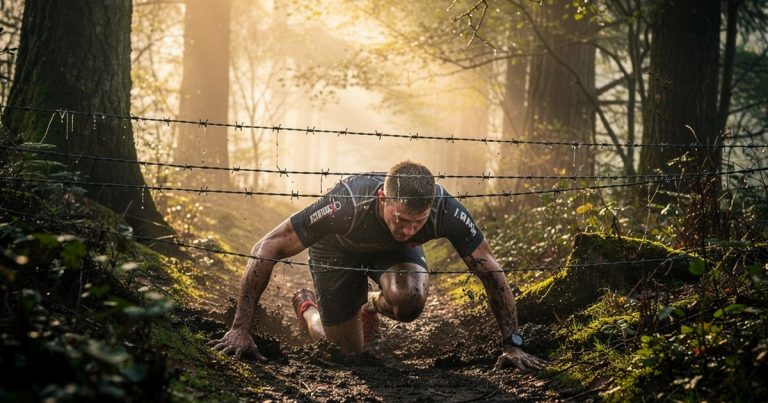
CrossFit athletes are crossing over into OCR in growing numbers. Here’s where the functional fitness base pays off immediately — and where the gaps show up if you’re not prepared.

USAOCR’s formal coaching certification pathway signals that obstacle course racing is done winging athlete development. Here’s what the shift means for the sport’s long-term health.

July and August are the most demanding months on the OCR calendar. Here’s how to pick the right races, respect the heat, and still get the most out of the mid-summer season.

Behind every great OCR finisher is usually a training crew. Wall & Wire looks at how grassroots OCR training groups form, what makes them stick, and why they might be the sport’s best-kept secret.
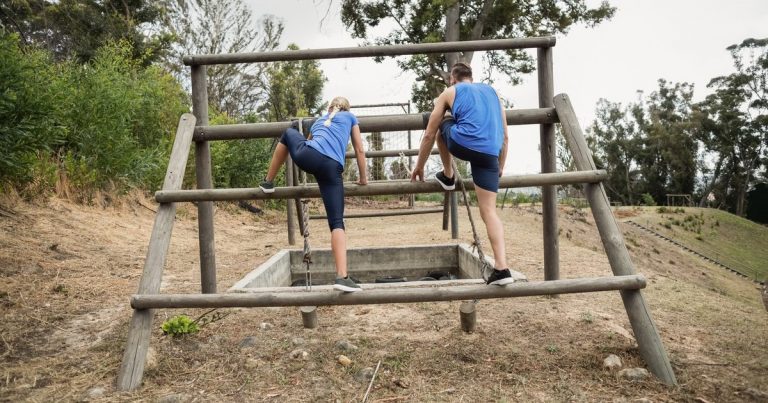
Mobility isn’t just a warm-up afterthought — it’s the edge that keeps OCR athletes moving through obstacles with power and precision. Here’s the gear that actually builds it.

Cold water immersion is everywhere in endurance sports — but does it actually work for OCR athletes? We cut through the hype and look at what the science really says about ice baths, contrast therapy, and when to use each.

The traverse wall is one of OCR’s most technical obstacles — and one of its least practiced. Here’s the complete technique breakdown that separates clean completions from burpee penalties.

Fat adaptation promises to make OCR athletes metabolically untouchable. The science is real — but so are the trade-offs for a sport that demands explosive bursts as much as steady aerobic output. Here’s the honest breakdown.

Triathletes are discovering that their endurance base, discipline, and multi-sport background make them natural fits for OCR competition — if they’re willing to embrace the mud, the grip work, and the beautiful chaos of obstacle racing.